
This is a subtitle for your new post
If you've ever been handed the job of organising a school disco, or you're a parent trying to work out whether to stay, go, or panic about what your kid is going to wear to a disco party, you've probably typed some version of "kids disco party questions" into Google at 11pm.
After 10+ years DJing clubs, weddings and corporate events, plus 15+ years running kids disco events specifically, I've heard every one of these questions asked in real life, usually in the school car park five minutes before doors open. Here's what actually works.
Do parents have to stay, or can we drop and go?
This is the single most-asked question, and honestly — it's entirely up to the organiser. There's no rule that says it has to be one way or the other; it comes down to the school, the venue, and the age group.
My tip: whoever runs the event should decide this early and put it in writing on the ticket or flyer, not leave it to word-of-mouth. Half the anxiety parents feel comes from not knowing the rules until they're standing at the door.
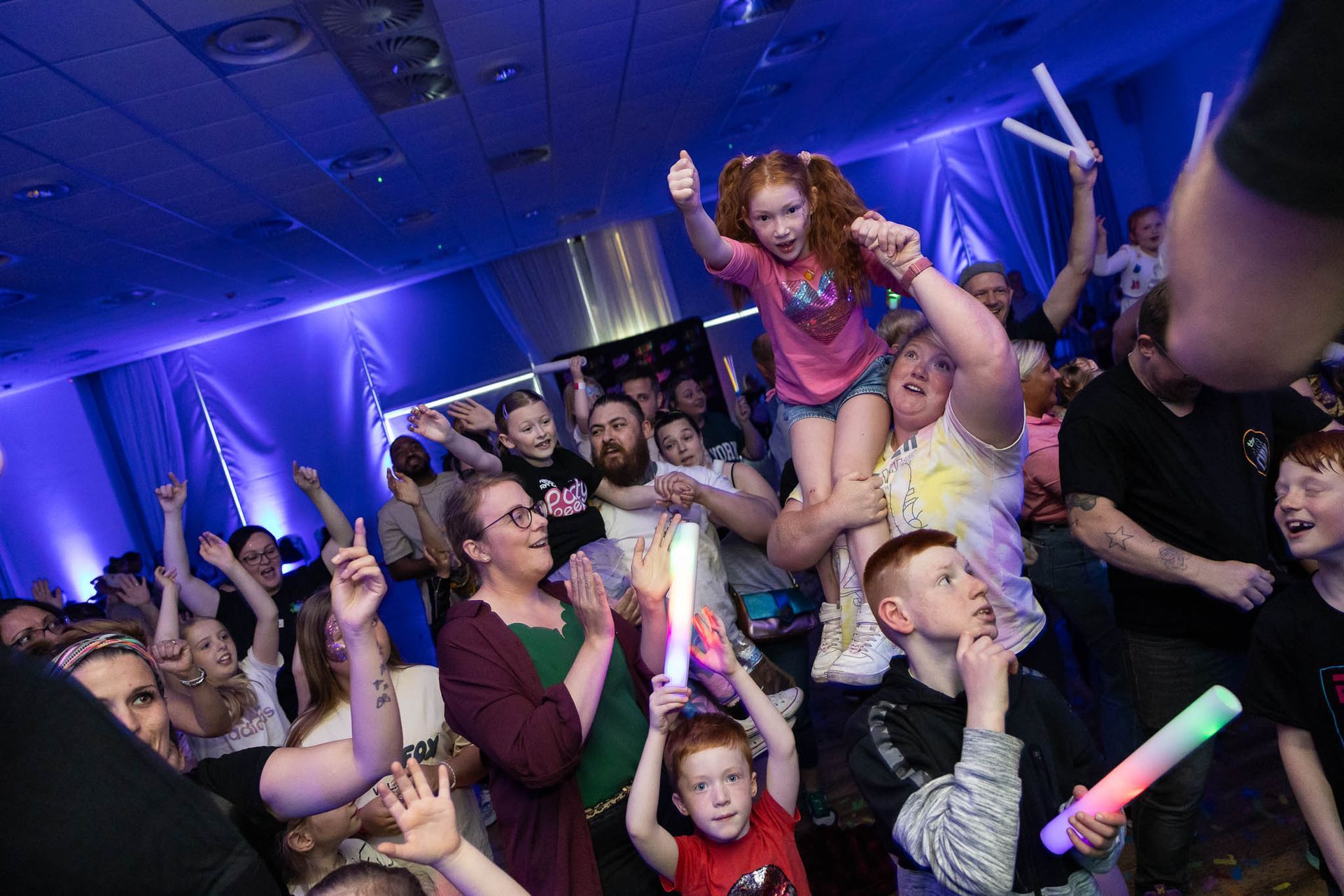
And if parents are staying — don't just let them stand around the edges watching their phones. Get them involved. Ask a few to help on the door, the food table, or just get out on the floor and dance. Parents who are roped in have a better time, the kids love seeing them join in, and it takes pressure off you as the organiser.
What should my kid wear?
Unless the invite specifically says fancy dress or has a theme (glow, neon, superheroes, crazy hair — all disco gold), it's normal, comfortable clothes. My actual professional tip that never makes it onto the invite: tell parents to dress light. A hall full of dancing kids heats up fast, and the kid in the puffer jacket is the one who overheats and wants to go home at the 20-minute mark.
How long should the disco run?
Shorter than you think, and it should scale with age. My general guide for a school event:
- Prep to Grade 2: 1 hour is plenty. Past that, energy crashes and you start fielding meltdowns instead of dance-offs.
- Grade 3 to 6: 1.5 hours works well if you've got a strong structure (games, dance-offs, a big final song) to carry the energy through the whole session.
If you're running multiple year-group sessions back to back, build in a 15-minute buffer between them for pickup, changeover and resetting the room — that gap is where most of the chaos happens if it's not planned.
Do we need a professional disco DJ, or can we just plug in a playlist?
You can absolutely run a disco off a Bluetooth speaker and a Spotify playlist — plenty of schools do. But there's a real difference between playing music at kids and reading a room of kids. A professional kids' DJ isn't just there for the song selection; they're managing energy levels, calling games, spotting the kid standing alone at the edge of the room, and adjusting the whole set on the fly based on how the group is responding. That's the bit a playlist can't do.
If you do go the DIY route, my tips:
- Build the set with clear energy waves — big opener, a few slower "reset" songs so kids don't burn out, then a huge closer.
- Vet every song for lyrics, not just the title. Radio edits aren't always what you think.
- Have a plan for when a song bombs — don't be afraid to cut it after 30 seconds.
How many volunteers or helpers do we actually need?"
More than you think, less than you fear. For a school event, a good working ratio is one helper per class, or roughly one adult per 20 kids. Practically, you want dedicated people covering:
- Door/sign-in and sign-out
- Toilets (someone keeping an eye, especially for younger years)
- Food and drinks table
- General floor supervision, separate from whoever is running the music
Don't try to have your DJ or MC also managing the door — split those roles every time.
What about food, drinks and the tuck shop?"
Keep it simple, and whatever you do, don't stop the disco halfway through to send kids out for food. Pausing mid-event kills the energy stone dead, and for a disco running around an hour, a food break isn't even necessary.
The better approach: sort food and drinks as kids are lining up to come in, before the music starts — not as an interruption once they're on the floor. For drinks, either have kids bring their own water bottle, or set up a simple, well-supervised drink station off to the side that they can duck to without the whole room stopping. If you're running it as a fundraiser, popular sellers include drinks, glow sticks, and simple snacks; if you want zero cash handling on the night, bundle extras into the ticket price and sell everything online in advance.
How do we handle pickup safely, especially if it runs into the evening?
This is the one that gets overlooked until it's dark outside and thirty kids are trying to spot their parents in a dim car park. The safest system I've seen consistently work comes down to whoever is running the music: a good DJ controls the room at the end, brings the energy down, and gets the kids sitting or settled in their groups before pickup starts. That calm handover means parents can walk in and collect their child without having to wade through a wall of noise and movement to find them. Never release children into an unlit outdoor space to "find" their adult — it's genuinely a safety risk, not just an inconvenience.
What if we've got kids who are sensory-sensitive or find loud events overwhelming?
This one doesn't get asked enough, and it should. Simple, low-cost adjustments make a real difference:
- A quieter side room or corner with dimmer lighting and lower volume, so kids can step out without stepping out of the event entirely.
- Giving a heads-up on what to expect (strobe lights, how loud, how long) in the lead-up, so parents can prepare their child.
- Avoiding sudden strobe or full blackout effects without warning.
- Letting sensory-sensitive kids arrive around 10 minutes early so they can see the space, the lights and the setup while it's still quiet, rather than walking into it at full volume with everyone else.
- Encouraging parents to bring along whatever helps their child feel comfortable — chew tools, noise-reducing headphones, and sunglasses are all completely normal to see on the dance floor, and worth normalising rather than raising eyebrows at.
This isn't a niche add-on — it's genuinely good event design for everyone, and it's something I build into every event I run.
How much should we charge, or how much does a kids disco party cost?"
For P&F/fundraiser-run discos, ticket prices commonly sit in a modest per-child range, often with a cheaper rate for families with multiple kids. For a professionally run kids' disco or party, cost depends heavily on duration, equipment, and whether entertainment (MC-style games, prizes, effects) is included versus just music. The honest advice: ask exactly what's included before comparing prices — "just music" and "a run MC'd event with games, lighting and crowd management" are very different products at very different price points.
Planning a school disco, fundraiser, or kids disco party in Melbourne? I'm Josh from Jitterbug Discos — I bring club and wedding DJ experience together with 15+ years of hands-on kids' entertainment, and I build sensory-friendly options into every disco party as standard. If you want a hand planning yours, get in touch or give me a call on 0411 825 023.